







Role of NEP 2020 in Early Learning (Play Schooling)
The National Education Policy (NEP) 2020 has brought a revolutionary change in India’s approach to Early Childhood Care and Education (ECCE). It recognizes that the first eight years of a child’s life are the most crucial for brain development, learning capacity, and emotional growth. NEP 2020 places early learning at the foundation of the new 5+3+3+4 education structure, where the Foundational Stage (ages 3–8) includes pre-primary to Grade 2.
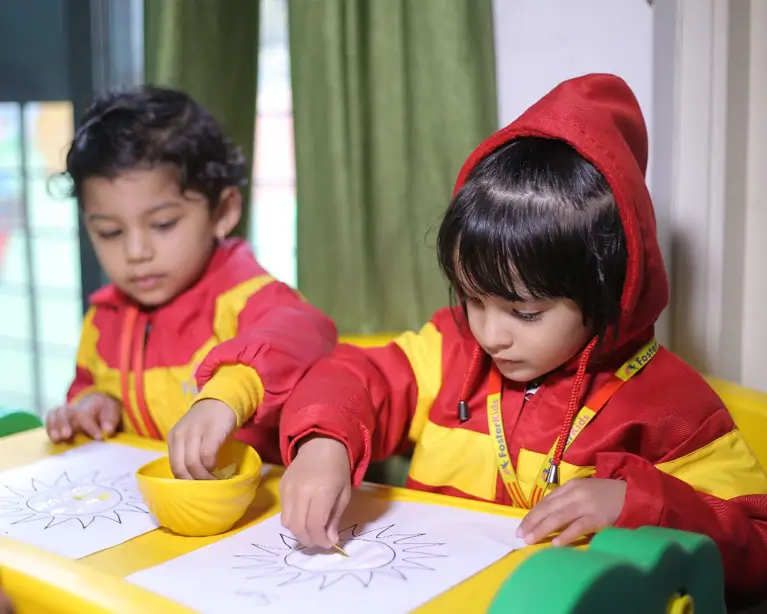
The policy emphasizes a play-based, activity-oriented, and discovery-driven curriculum, replacing rote learning with experiential learning. Children learn through stories, rhymes, music, movement, art, and exploration—making education joyful and meaningful. It also stresses on developing early literacy and numeracy skills, along with social, emotional, and motor development.
NEP 2020 promotes flexibility, inclusivity, and multilingualism, encouraging the use of the child’s home language or mother tongue as the medium of instruction in early years. It highlights the integration of care and education, ensuring holistic development in physical, cognitive, and emotional domains.
Overall, NEP 2020 redefines early learning in India by making it child-centric, developmentally appropriate, and rooted in Indian culture, thus laying a strong foundation for lifelong learning and success.