







NEP 2020
The National Education Policy (NEP) 2020 represents a landmark reform in India’s education landscape, placing Early Childhood Care and Education (ECCE) at the heart of the national learning framework. For the first time, education from the age of three years has been formally integrated into the school system through the innovative 5+3+3+4 structure, replacing the earlier 10+2 model. The first five years, referred to as the Foundational Stage, encompass three years of pre-school education followed by Grades 1 and 2—recognizing that early learning forms the bedrock of lifelong development.
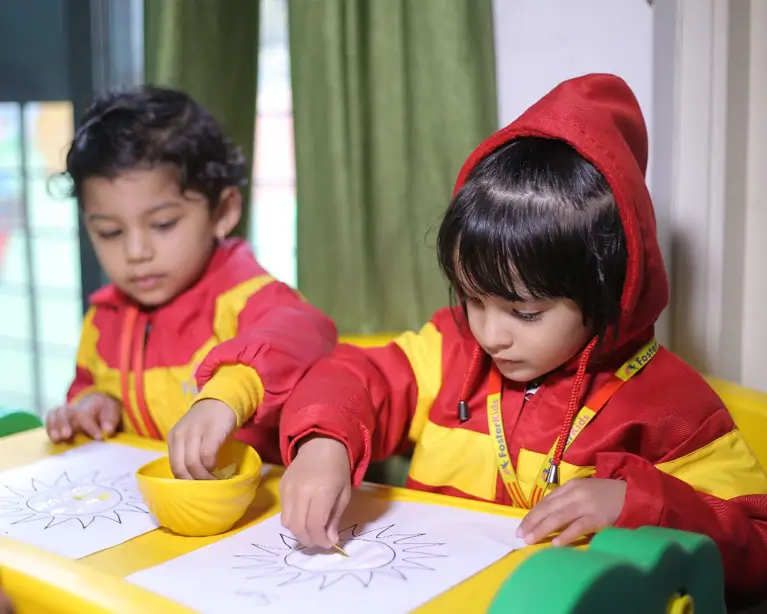
NEP 2020 acknowledges that nearly 85% of brain development occurs by the age of six, making the early years crucial for building physical, cognitive, emotional, and social skills. The policy envisions a play-based, activity-oriented, and discovery-driven approach to early education, moving away from rote methods towards joyful and experiential learning. This paradigm shift empowers play schools and pre-primary institutions to focus on nurturing curiosity, creativity, and foundational literacy and numeracy through stories, songs, games, art, and movement.
A key reform introduced under NEP 2020 is the establishment of a National Curricular and Pedagogical Framework for ECCE (NCPFECCE) by NCERT. This framework provides a common direction for curriculum design across Anganwadis, government schools, and private play schools, ensuring equity and quality in early learning. The creation of the “Balvatika” (Preparatory Class) and the “Vidya Pravesh” school-readiness program further bridge the gap between pre-school and primary education, enabling smoother transitions for young learners.
The policy also emphasizes professional training and capacity building of ECCE educators. Teachers and Anganwadi workers are encouraged to undergo specialized certification in early childhood pedagogy to deliver developmentally appropriate and inclusive learning experiences.
For the play school sector, NEP 2020 offers new opportunities and greater responsibility. By officially recognizing ECCE as an integral part of the education system, it opens avenues for innovation, partnership, and expansion—while also demanding adherence to higher academic and infrastructural standards.
In essence, NEP 2020 transforms the vision of early education from academic preparation to holistic child development. It ensures that every child enters formal schooling with the confidence, curiosity, and foundational skills required to thrive, marking a significant step toward building an educated and empowered future generation.