






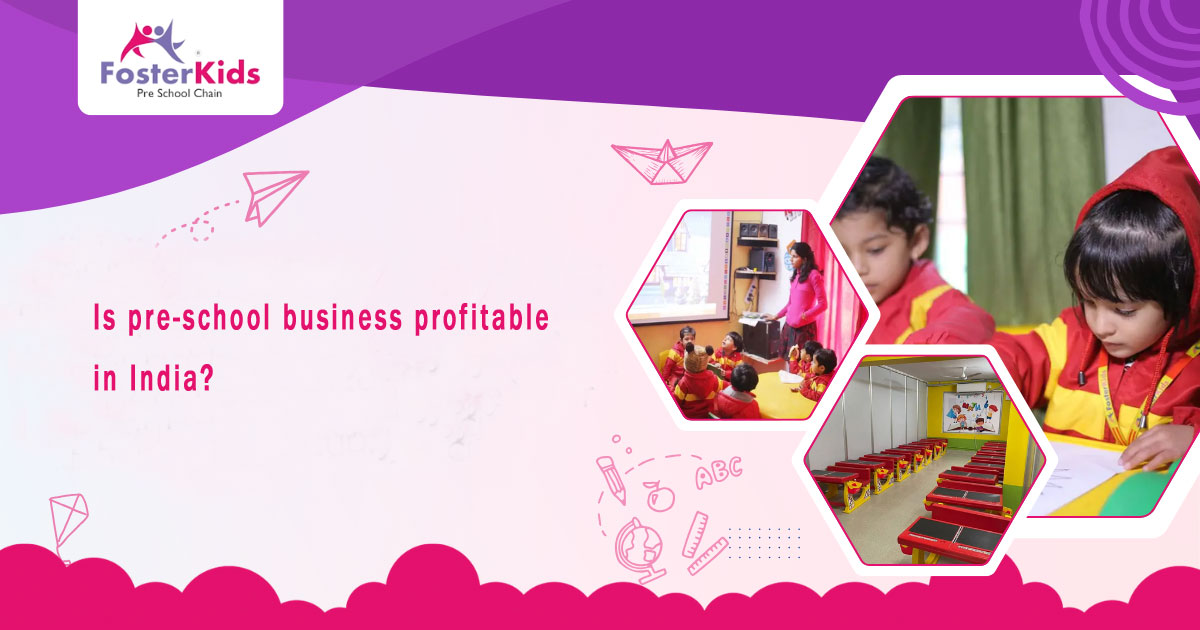
The education system of India has witnessed great revamp in the past few decades. The government of the day placed emphasis on early childhood development and hence great care has been taken in the development of curricular and extra-curricular activities so that children can benefit to the fullest. And all these emphases have given rise to pre-school industry making it a lucrative and promising business. This rise has translated into great opportunities for those edupreneurs, who apart from making money through pre-school education through franchises, also committed to contributing to the educational upliftment of small children.
Let’s examine why the Indian pre-school sector is not only becoming popular, but also increasingly seen as a profitable and satisfying investment opportunity.
Growing Demand for Quality Early Childhood Education
The recent scientific surveys on the children below 6 years of age have proved beyond any reasonable doubt that the first six years are quite critical for children for their cognitive, emotional, social as well as physical development. Therefore, the contemporary Indian parents have become more and more aware of their children’s overall development and nurturing. Resultantly, there has been a steep rise in the demand of structured early childhood education, propelling the expansion of the pre-school industry in India.
Resultantly, parents actively look for a learning environment that is not just curriculum based. They want a mode of education that provides more than just the basic childcare, a place that can instill self-confidence, creativity and better interaction and language skills to their children.
The need for having more and more pre schools can easily be understood from a single fact that presently India has more than 160 million children under the age of six. Today, the demand for well-structured pre-school set up is more than ever because of several reasons, especially rapid mode of urbanization, dual earning in households(both parents working), rise in nuclear families and focus on high-quality education right from childhood.
For those who want to enter the education sector with a business mindset, known as edupreneurs, this change in perspective has created a huge opportunity to invest in the pre-school industry.
Why the Franchise Model Works Best for Pre-Schools
Although some investors might think about opening their own independent pre-school, the franchise model has proven to be the most effective and safest way to get into the market.
There are a number of advantages to the franchise model, particularly for new investors or those with little prior experience in the educational field.
Key Advantages of Pre-School Franchises:
- Established Curriculum and Methodology
Since franchisors offer a curriculum that is comprehensive and contains all the reading materials that are suggested by various recent researches conducted all over India and developed by early education specialists, the franchise-based pre school education becomes able to maintain high academic standards and promises consistency in the way education is provided.
- Brand Recognition and Trust
Establishing trust is essential for any business in education sector. A well-known brand helps parents make decision quickly. They do not waste time dilly-dallying whether they should pick your centre or not. If your centre bears a brand, it will get good amount of children for sure.
- Higher Return on Investment (ROI)
Generally, preschools need a smaller capital investment in comparison to primary or secondary schools. And even in small investment, the franchise becomes able to generate very good amount of money with the help of high enrolment and low operational expenses.
- Structured Support and Training
Franchisors guide you through every step, be it hiring employees to digital marketing. They are your constant companion in every work that you do, right from choosing a location to interior design. Their continuous support guarantees seamless operations of your center.
- Fulfilling Market Demand
The franchise model bridges the gap between demand and supply for high-quality education to kids. Though pre-schools are in great numbers in metropolitan and big cities, they are very limited in tier 2 and tier 3 cities and in cities franchise model is doing wonders.
Steps to Launch a Pre-School Franchise:
- Business Proposal Submission
After you get interested in a particular franchisor, you submit business proposal specifying your location and other necessary details outlined in the proposal form.
- Evaluation & Site Inspection
After the franchisor gets business proposal, that franchisor assess the suggested site, based on its accessibility, demographics and other viability considerations. A site inspection guarantees that it complies with the specifications of the brand.
- Feasibility Report
Once site inspection gets approved without any objection, a feasibility report is prepared. In that report, projected student strength, local demand and expected Return on Investment are mentioned eloquently.
- Signing the Memorandum of Understanding (MoU)
After the feasilibility report gets approved, an MoU is prepared. This MoU details the partnership terms, such as the franchise fee, time duration of the agreement and offered support services. If accepted by both parties, an MoU gets signed.
- School Setup and Branding
In order to maintain uniformity across all centers, the franchisor assists with the setup of classrooms, play areas, branding materials, safety installations, and hygiene procedures.
- Recruitment and Staff Training
In order to maintain high standard of education, franchisor provides full assistance in staff hiring, recruitment, onboarding and training.
- Pre-Launch Marketing Campaign
In order to raise awareness and encourage early enrolment, targeted offline and online marketing campaigns are run before the official opening of the school.
- Grand Opening Ceremony
A grand opening ceremony is scheduled after the pre-launch marketing campaign. Leadership speeches, parent orientations and media coverage are held on that day. The main purpose of opening ceremony happens to be involving community and establishing credibility.
- Ongoing Support
Through frequent audits, curriculum updates, tech integrations, marketing plans, and teacher refresher training, the franchisor keeps up its support.
Is Pre-School Business Really Profitable in India?
Yes, it is — but success depends on a few critical factors:
- Location
One important factor that determines success is location. The best areas are urban and semi-urban areas with middle-class to upper-class populations, working parents, and good access to transportation.
- Brand Partnership
Not every franchisor is created equal. Stronger community trust, improved training, and established systems are all guaranteed when working with a reputable brand.
- Operational Excellence
Operational excellence plays a great role in maintaining the popularity of a pre school. Infrastructure and school set up alone can’t do wonders. Consistent quality in teaching, administration, cleanliness, parent-teacher communication, all these are the pillars of operational excellence that need to be maintained for maintaining the name and fame of a particular pre school.
- Marketing and Outreach
If the visibility is far from adequate even the best set up might go unnoticed. Though there is no denying of the fact that franchisors do offer robust marketing assistance, but at the same time it is also true that local outreach, such as school tours, community events and online presence are equally important.
- Retention and Word-of-Mouth
Your best marketers are contented parents. Recurring enrollments and a solid reputation are created by providing value, upholding transparency, and raising kids in a fun, safe environment.
How Much Can You Earn?
A well-run preschool can break even in 12 to 18 months, though profits differ depending on location, scale, and brand. Low overheads and tuition income each month can result in a 30–40% net profit margin. Additional revenue streams are provided by seasonal admissions and short-term courses (weekend activities, summer camps).
Beyond Profit: Making a Difference
Profitability is crucial, but the opportunity to influence young lives is what the preschool industry has to offer. Contributing to children’s development, generating employment in their community, and advocating for educational equity are all sources of fulfillment for many edupreneurs.
And more importantly, this sector is quite immune to any national or global recession. Once a student gets enrolled, does not leave, unless its primary education is complete. The parents of today understand the importance of education in formative years and hence they continue the education of their children, regardless of their economic conditions.
Final Thoughts
So, now the answer of the big question “is it profitable to run a preschool in India?”
Yes, if done correctly.
The pre-school industry can provide both financial gains and great personal fulfillment with the correct franchise partner, a prime location, a top-notch staff, and a commitment to excellence. Now is a great time to enter this market because India still places a high priority on early childhood education and the government encourages private involvement through accommodating policies.
A pre-school franchise might be the ideal way for an aspiring edupreneur to get started in the flourishing education industry and make a difference while developing a scalable business.